
The Moment You Notice Something's Off
You press the button and the opener groans a little longer than it used to. Or maybe the power flickered during last week's afternoon storm, and you had to pull the manual release and lift the door yourself—and it felt heavier than you remember, like it wanted to slam shut the second you let go. That's the moment most homeowners first suspect their garage door is out of balance. The good news: it's one of the easiest things to check yourself, and catching it early can save you an opener replacement down the road.
Why Balance Matters More Than Most People Think
A garage door isn't supposed to rely on its opener for lifting power. The springs—torsion or extension, depending on your setup—are doing almost all the work, counterbalancing the weight of the door so the opener only has to nudge it along the track. When springs weaken or lose tension, the opener starts compensating, drawing more power, straining its gears, and wearing out its drive belt or chain faster than it should.
In Central Florida, this problem shows up a little sooner than it might elsewhere. Humidity and afternoon downpours cause wood and composite panels to swell, adding extra weight the springs weren't sized for. Homes closer to the coast deal with salt air that accelerates rust on spring coils and cable ends, which weakens them unevenly. A door that was balanced in the spring can be noticeably off by hurricane season.
Tools You'll Need
- Work gloves
- A stepstool (if your release handle is high)
- A pencil or piece of tape
- A second person to help, though not strictly required
How to Test Your Garage Door's Balance
- Close the door completely. Start from a fully closed position so you have a consistent baseline.
- Locate the manual release cord—the red-handled rope hanging from the trolley on the opener rail—and pull it to disconnect the door from the opener. This step matters: testing balance with the opener still engaged will give you a false reading.
- Lift the door by hand to about waist height, roughly three to four feet off the ground.
- Let go and watch what happens. A well-balanced door will stay put, or drift down just slightly. If it crashes down, the springs are too weak. If it flies upward on its own, the springs are wound too tight.
- Repeat the test at a few different heights—closed, halfway, and nearly open. Torsion spring problems sometimes only show up at certain points along the track, especially if one spring has weakened more than the other.
- Watch for uneven movement while lifting, such as one side rising faster than the other. That can point to a cable issue or a bent track rather than the springs themselves.
- Reconnect the opener by pulling the release handle again (or following your opener's reconnect instructions) before using the door normally.
What a Visual Check Can Tell You
While you're in there, look at the springs themselves. Gaps between coils, visible rust, or a spring that looks stretched compared to its partner are all warning signs. Frayed or rusted cables near the bottom brackets are another red flag, especially after a season of heavy humidity or coastal salt exposure.
What You Can Handle Yourself
The manual lift test, the visual inspection, and listening for new grinding or straining sounds from the opener are all safe, straightforward homeowner tasks. If everything looks and feels balanced, you've likely ruled out one of the more serious causes of opener strain.
What Needs a Technician
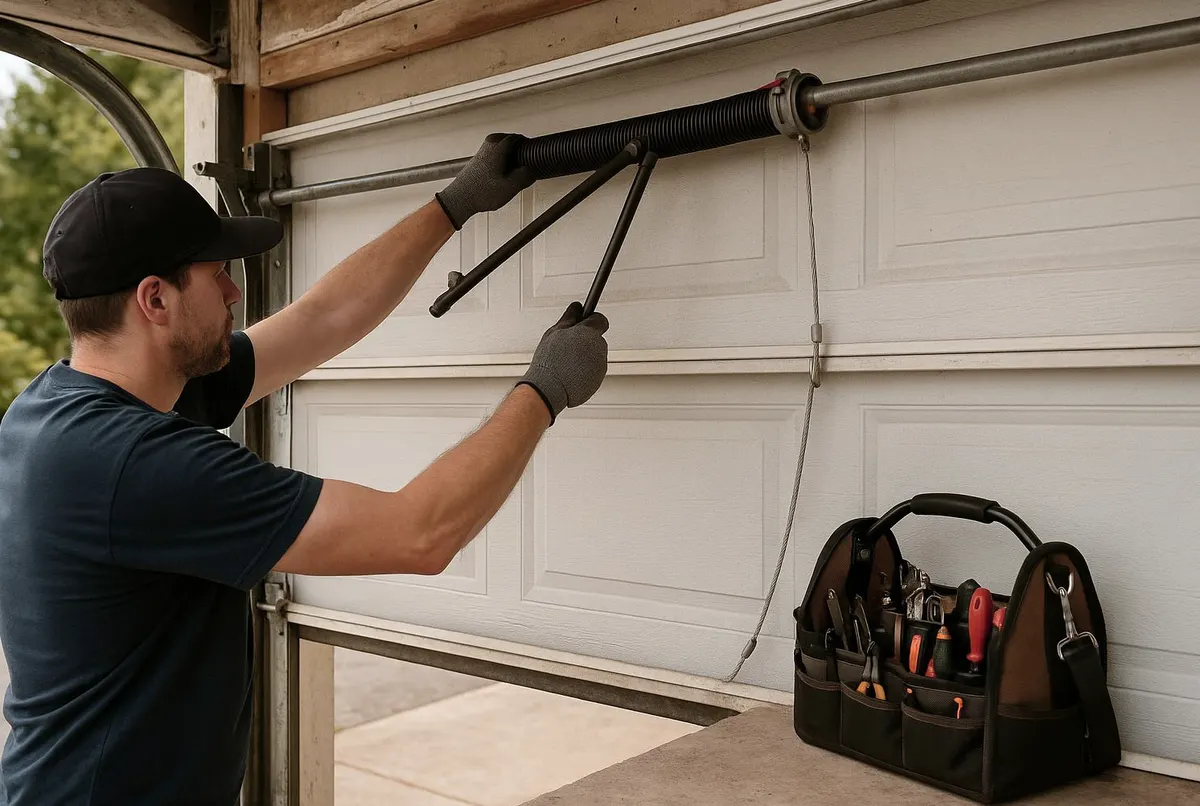
Adjusting spring tension, replacing a spring, or working with the winding bars is not a DIY job. Torsion springs in particular store enough energy to cause serious injury if handled without the right tools and training. If your test showed a door that's clearly unbalanced, or cables and springs that look worn, that's a job for a trained technician, not a weekend project.
When to Call Orlando Garage Door Repair
If your door slammed down, shot upward, or wouldn't stay put at any height during the test, it's time to call us. We offer Garage Door Spring Repair to replace worn or mismatched springs safely, and our Garage Door Maintenance & Tune-Up service checks balance, cables, and hardware together so small issues don't turn into opener failures. We serve Orlando, Kissimmee, Winter Park, Dr. Phillips, Windermere, Altamonte Springs, Ocoee, and Lake Buena Vista, and we can usually get a technician out the same day.
Don't let a tired opener mask a bigger spring problem. Call Orlando Garage Door Repair today and let a local technician get your door balanced before hurricane season puts it to the test.