
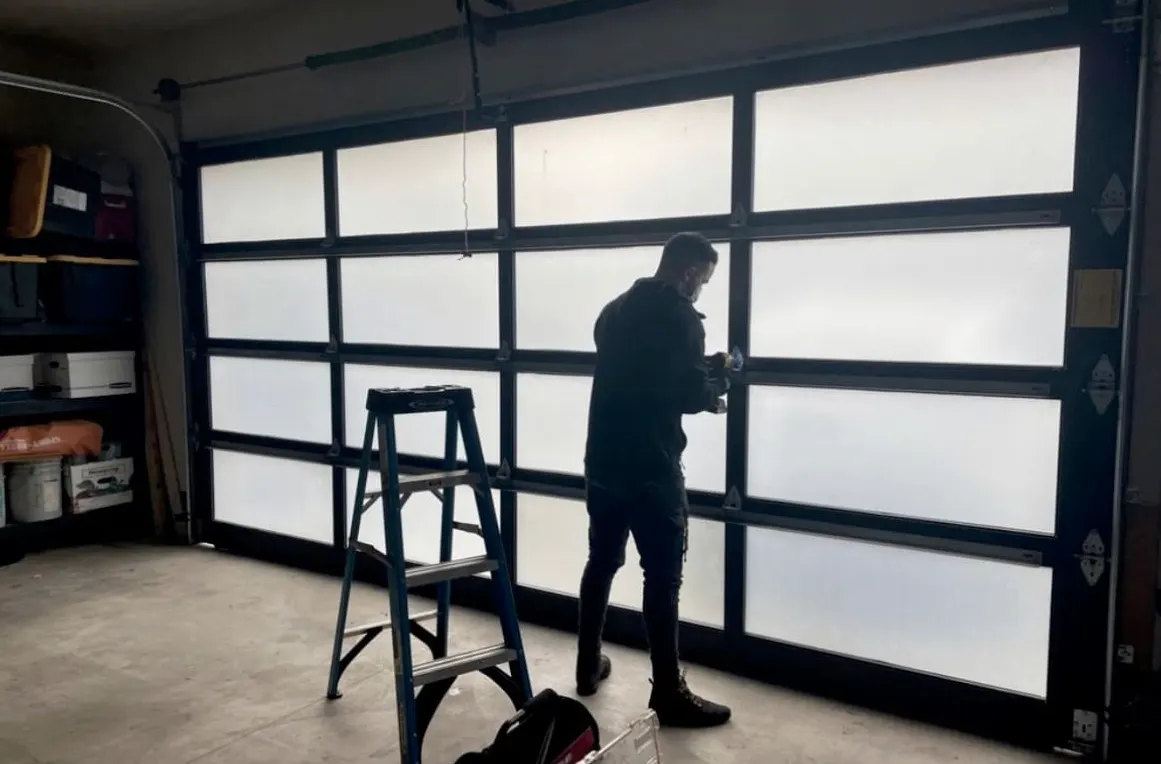
The mistake almost every buyer makes
You walk into the garage, hit the opener button, watch the door glide up and down once, and move on to the kitchen. It's tempting because it feels thorough — the door moved, nothing fell, problem solved. But a general home inspector usually does the same thing: one cycle, a visual glance, a checkmark on a long form. Garage doors have a dozen moving parts under heavy spring tension, and a single smooth cycle tells you almost nothing about rust working through a track, a spring near the end of its life, or an opener with no battery backup heading into storm season. If you're buying a home in the Orlando area, where heat, humidity, and hurricane-season wind are part of daily wear, it's worth five extra minutes before you sign.
Walk the garage and check these yourself
1. The springs
Look above the door at the torsion spring (a single thick coil on a bar) or along the sides for extension springs (stretched coils over the tracks). Check for visible rust, gaps between coils, or a spring that looks stretched thin compared to the rest of the coil. If it fails: a worn spring can snap without warning, and replacement is routine maintenance — but it's leverage to negotiate, not a reason to panic.
2. The tracks
Run a hand along the metal tracks the rollers ride in. Feel for rust texture, flaking, or spots where the metal has pitted. Then sight down the track from the bottom to see if it's bowed or pulling away from the wall. If it fails: rust usually means years of humidity exposure or a door that's been sitting near standing water; a bowed track means the door has likely come off track before.
3. Panel condition
Press gently on the lower panels, especially near the bottom corners. Look for soft spots, bubbling paint, or a panel that feels thicker or swollen compared to the ones above it. If it fails: swelling points to moisture getting into the panel core, common on doors that face prevailing rain or sit low to a slab that holds water after afternoon downpours.
4. Cables
Check the cables running from the bottom brackets up to the drum near the springs. Look for fraying strands, rust on the cable itself, or visible slack when the door is down. If it fails: a frayed cable is a safety issue, not a cosmetic one — it can let a door drop unevenly or fall.
5. Auto-reverse safety sensors
Close the door and wave a hand (or a broom handle) through the sensor beam near the floor. The door should stop and reverse immediately. Then try the pressure test: lay a 2x4 flat on the ground where the door closes and run the cycle — it should reverse on contact. If it fails: this is a liability issue for a new owner with kids or pets, and it's often a simple misalignment or a sensor that needs replacing.
6. Weatherstripping and bottom seal
Look at the rubber seal along the bottom of the door and the sides. Check for cracking, gaps, or sections that have pulled loose. If it fails: gaps let wind-driven rain in during storms and let humid air inside, which feeds rust on everything stored nearby.
7. The opener's age and backup power
Check the brand and model sticker on the opener motor, and ask whether it has battery backup. If it fails or is missing: an opener with no backup means a power outage during a storm leaves the door stuck, which matters here more than in most places given how often hurricane season brings outages.
8. Bracing and overall wind resistance
Look at the back of the door for horizontal struts (metal bars reinforcing the panels). A door with no visible bracing on a wide two-car opening is worth asking about. If it's missing: it doesn't mean the door is unsafe today, but it's a point to flag for anyone planning to keep the home through multiple storm seasons.
9. Noise during the cycle
Run the door up and down one more time, listening for grinding, popping, or a scraping sound as it moves. If it's noisy: this usually points to dry or rusted rollers and bearings — not urgent, but a sign maintenance has been skipped.
When to call in Orlando Garage Door Repair
If your walk-through turns up a spring that looks worn, cables with fraying, or a door that's clearly off track, that's the point to call in a professional before closing or right after move-in. We handle garage door spring repair and cable repair regularly on homes that are otherwise in great shape — it's one of the most common gaps buyers find. We can also do a full garage door maintenance and tune-up to catch anything the checklist above doesn't cover, lubricate the moving parts, and make sure the opener's safety reversal is dialed in correctly.
If you're closing on a home anywhere from Dr. Phillips to Winter Park to Lake Buena Vista and want a second set of eyes on the garage door before move-in day, call Orlando Garage Door Repair for same-day service across the Orlando area.